
Knowledge
4 major causes of probe burning and a full set of prevention programs
The core sentence: select the right probe withstand voltage, control surge current, do a good job of ESD protection, strictly abide by the grounding rules, this 4 is the bottom line of anti-burn probe.
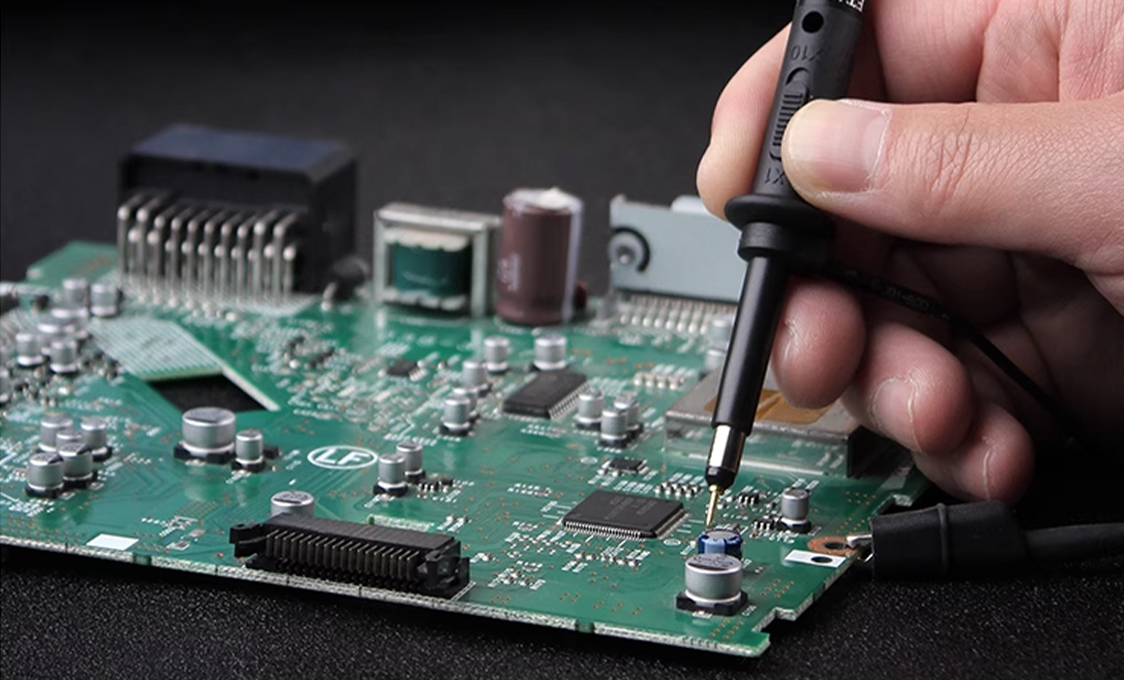
1.Overvoltage protection
Risks: exceeding the rated RMS/peak voltage of the probe, pulse spikes, power-on surges, and high-voltage common-mode superposition will cause passive probe voltage divider resistance breakdown and active probe input FET direct breakdown.
Avoidance method
1. Check the nameplate of the probe before use, and distinguish CAT safety level, RMS rated voltage and peak pulse voltage; DC effective value shall not be the only reference for spike pulse evaluation.
2. Conventional 10 × passive probe has a withstand voltage of about 300Vrms, and direct measurement of 220V live wire and 400V bus of switching power supply is prohibited. Please select high-voltage differential probe for high-voltage and floating ground measurement.
3. When the point potential is unknown, use a multimeter to pre-measure AC/DC, confirm that the voltage is within the scope of the probe specification, and then connect the oscilloscope.
4. Reserved safety margin: it is recommended that the actual measured voltage should not exceed 70% of the rated value to resist spikes, lightning strikes and power-on surge impacts.
5. Follow the power-on sequence: the probe is connected to the BNC interface of the oscilloscope first → the ground wire is connected to the measured reference ground first → the probe is finally in contact with the signal point; reverse operation during removal, and it is strictly prohibited to introduce high-voltage spikes into live plug-in.
2.Overcurrent protection
Risks: accidental short circuit at the tip of the probe and the ground clamp, instantaneous impact of large current burns the internal resistance, lead and chip of the probe; Probe damage is mostly short-circuit instantaneous impact, not continuous high current.
Workaround
1. Probes and grounding clamps cannot touch two nodes with different potentials at the same time. Spring grounding pins are preferred for PCB pin testing to reduce the risk of short circuit.
2. When measuring high-power power supplies and power devices, 1k ~ 10k current limiting resistors can be connected in series at the test points to suppress short-circuit impulse current.
3. The probe cannot replace the multimeter probe and does not support continuous high current detection. Please use current probe for current measurement.
3.ESD electrostatic protection
Risk: Human body static electricity can reach thousands to tens of thousands of volts, easy to break down the active probe front-end semiconductor devices.
Workaround
1. Before operating the active probe, release the static electricity of the human body. You can touch the grounded metal or wear an anti-static bracelet to ensure the reliable grounding of the worktable.
2. Dry autumn and winter environment focuses on anti-static. When the probe is idle, the probe shall be well insulated and protected.
3. Before the circuit board is powered on, the on-board capacitor is fully discharged to prevent charge accumulation at the node to be measured.
4. Avoid touching the metal end of the probe directly during storage and insertion of the active probe.
4.Grounding Guidelines (High-Risk Item: Can Easily Cause Simultaneous Damage to the Probe, Oscilloscope, and Tested Circuit Board)
Key note: desktop oscilloscope BNC shell, probe clip and protect the earth PE directly connected, which is the root of most of the explosion machine accident.
Risk: The ground clamp is connected to the live wire, hot ground and floating ground nodes by mistake, resulting in a short circuit to the ground, and the instantaneous high current burns the voltage dividing resistor and cable of the probe. During multi-channel testing, different channels are clamped with different potentials, which will form a short circuit in the ground loop.
Workaround
1. Single-ended passive probe: the ground clamp can only clamp the reference ground of the circuit under test, and it is strictly prohibited to connect non-ground potential, switch node and commercial power line.
2. Floating circuit (switching power supply primary, half-bridge upper tube, etc.): direct measurement by ordinary single-ended probe is prohibited, and high-voltage differential probe is preferred; Isolation transformer can only be used for temporary emergency, with potential electric shock hazard, and long-term use is not recommended.
3. Multi-channel synchronous measurement: all probe ground clamps must be connected to the same reference ground.
4. High-frequency measurement with short-circuited ground spring, reduce the ground wire inductance, while reducing the risk of short circuit; long alligator clip ground wire is only suitable for low-frequency small signal test.
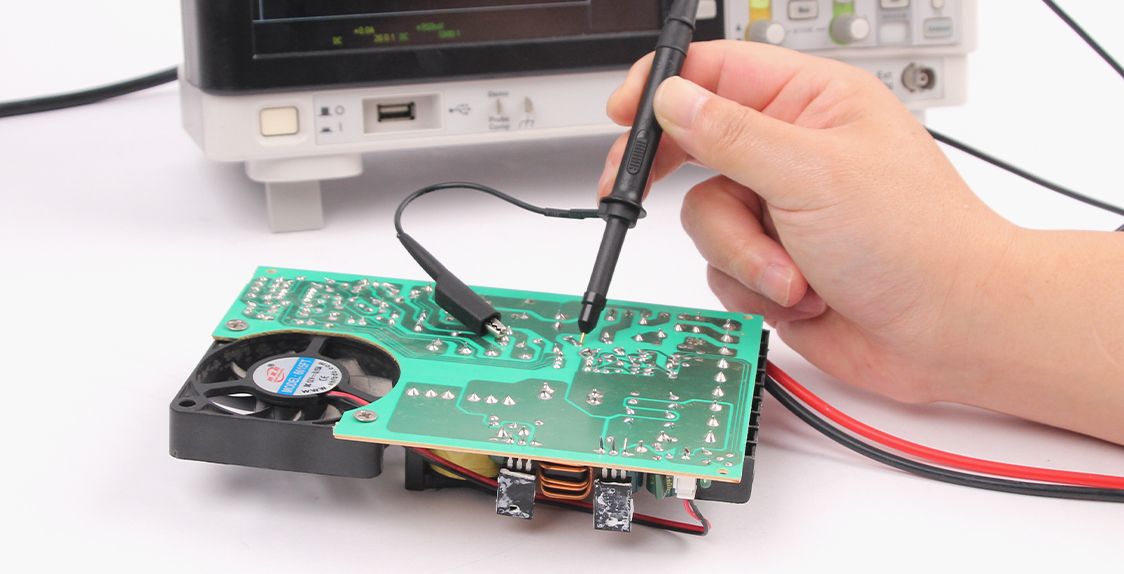
Routine maintenance and self-inspection
1. Visual inspection before use: the cable sheath is cracked, the probe is loose, the insulation layer is damaged, and it is not allowed to be put into use.
2. Regular multimeter self-test: there shall be no conduction between the probe end and the ground clamp, which means the internal damage of the probe.
3. Complete the probe compensation calibration before each time on the aircraft, and synchronously observe whether the probe is in abnormal working state.
4. Storage requirements: avoid repeated bending of the probe root, and the cable shall not be pressed or pulled for a long time.