
Knowledge
3 step troubleshooting method to quickly locate the root cause of the fault (III) 3)
1.1 probe attenuation ratio settings are not synchronized
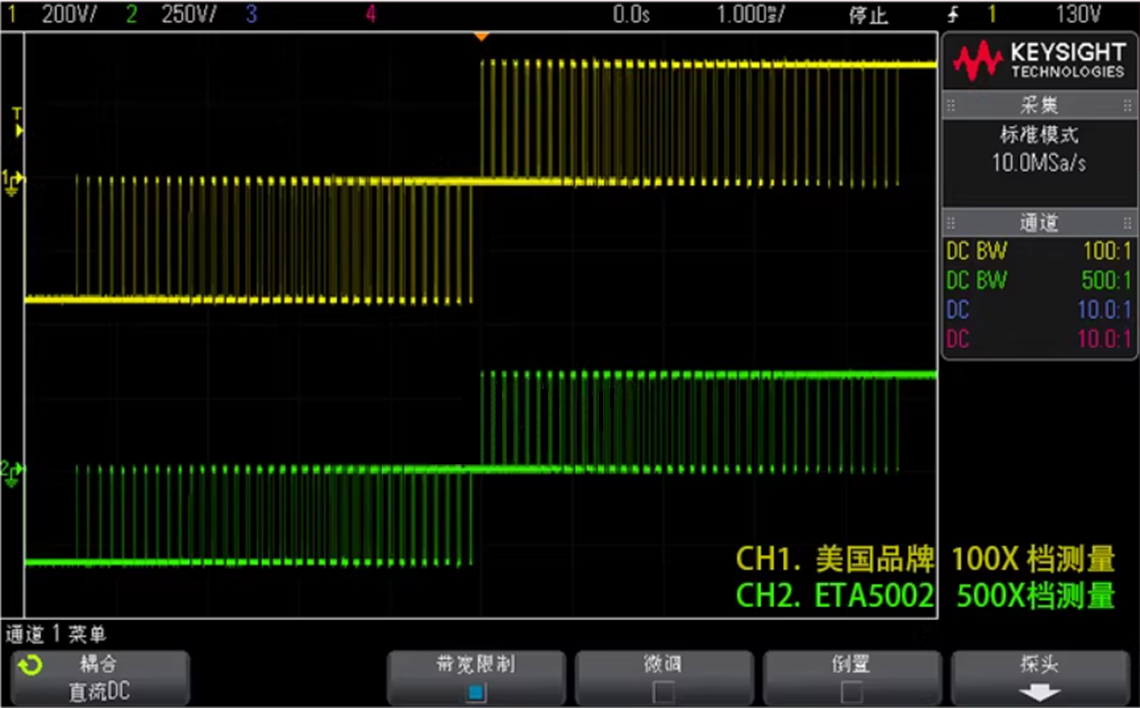
The probe attenuation ratio is used to broaden the measurement range and must be consistent with the oscilloscope channel settings. If the probe is set to 50X and the oscilloscope is set to 1X, the measured value will be 50 times larger. Otherwise, it will be 50 times smaller, directly causing distortion of the reading.
Troubleshooting and Resolution:
Confirm the position of the probe attenuation lever first, and then set the same attenuation ratio on the corresponding channel of the oscilloscope.
1.2 Improper Impedance Matching Causing Load Effect
● If the input impedance of the oscilloscope and the probe does not match the output impedance of the circuit under test, signal reflection is easy to occur, resulting in measurement errors. Oscilloscope commonly used input impedance: 1MΩ: suitable for general low frequency/low speed signal measurement
● 50Ω: suitable for high frequency/RF signal measurement
Impedance mismatch will directly lead to significant deviation of high-frequency signal amplitude and frequency measurement.
Troubleshooting and Resolution:
● Universal low frequency/low speed measurement: select 1MΩ input impedance channel, with 1MΩ passive probe
● High frequency measurement (>1GHz): select 50Ω input impedance channel, with 50Ω coaxial probe or active probe to ensure consistent cable impedance
1.3 strong electromagnetic environment interference
Frequency converter, motor, high-power transformer and other equipment will produce strong electric field, strong magnetic field, through the probe cable or ground circuit coupling interference, resulting in waveform jitter, data fluctuation, error is too large.
Troubleshooting and Resolution:
● Keep away from interference sources, at least 1 meter distance
● Shorten the probe cable, avoid parallel routing with interference cables, and give priority to shielded cables
The use of short ground wire, the nearest choice of no large current noise "clean grounding point", reduce interference coupling